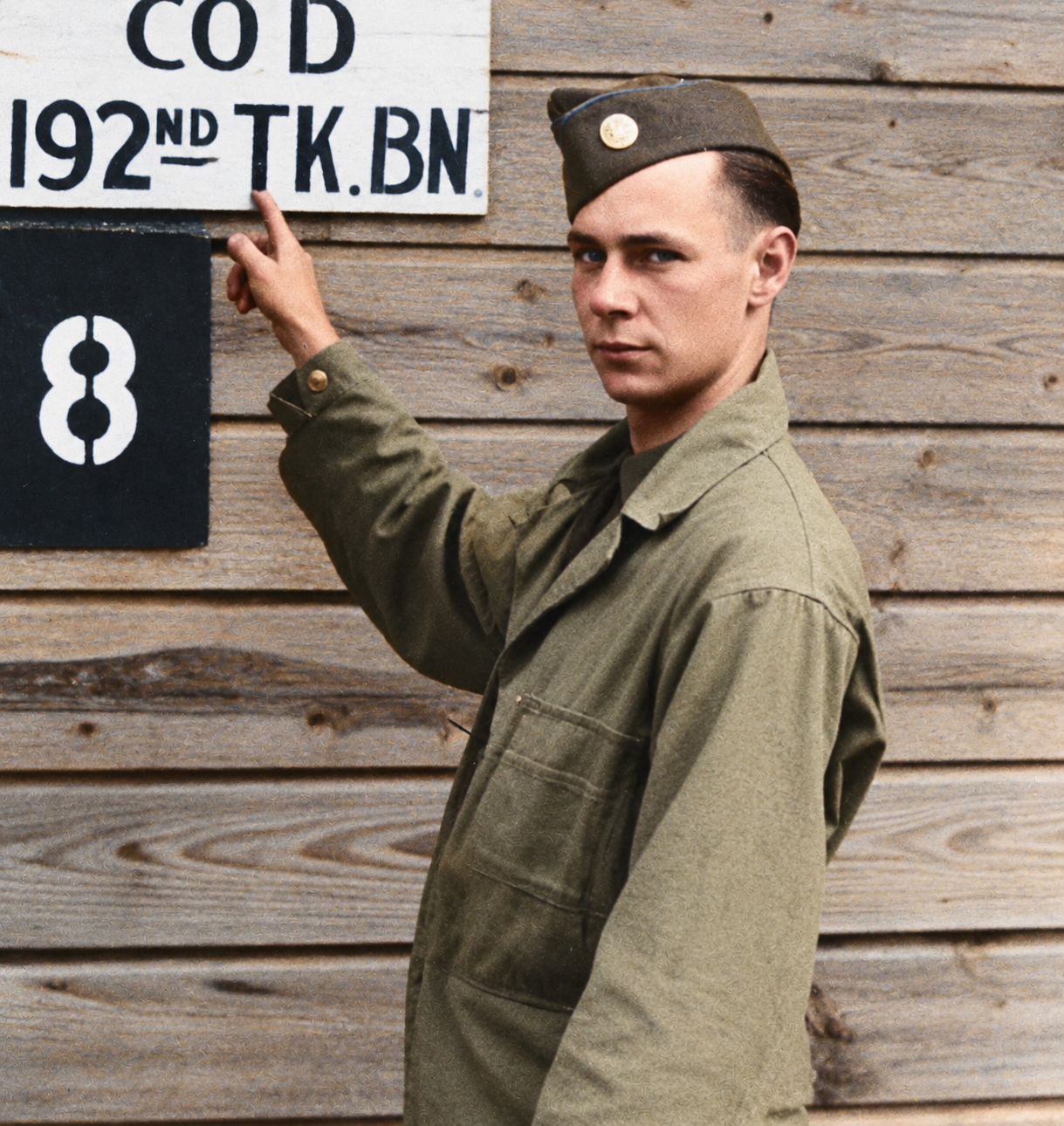
This is a digitally enhanced colorized image of the original black and white photo taken in 1940 at Fort Knox, KY.
Joe Baxter Million
Staff Sergeant Joe Baxter Million, 26, of Mercer County, Kentucky, died on 14 December 1944 when he was burned to death in the Palawan Massacre near the city of Puerto Princesa, Palawan Province, Palawan Island, Philippines, while a prisoner of war on federal active duty with D Company of the 192nd Tank Battalion. Palawan Island is South and West of Manilla.
Million was born on either 30 June 1918 in Mercer County, to Charles Million & Flora Norton-Million and he worked on the family farm along with his older brother Carl and sister Venetta. His military documents before the war all list his date of birth as 30 June 1918 and additional skills as a mechanic. The Kentucky Vital Records Index website lists his date of birth as 1 July 1918 as do some other sources such as the Bataan Project website; however this date has been proven to be incorrect.
Million enlisted in the Harrodsburg National Guard unit on 1 August 1940 at the age of twenty-two and was a private when he went on federal active duty with his unit on 25 November 1940. Following nearly eleven months of training at Fort Knox, KY, the unit was issued mobilization orders to the Pacific theater of operations.
Moving under secret orders, Company D arrived in the Philippines by Thanksgiving Day, 1941. War came to them when the Japanese attacked Clark Field just a few hours after the attack on Pearl Harbor. The Harrodsburg Tankers along with the allied forces fought the Japanese valiantly without reinforcements or resupply until they were ordered to surrender in April 1942. They had delayed the Japanese Army's timetable from 50 days to four months, giving the allies vital time to protect Australia and recover from the attack on Pearl Harbor.
According to the Bataan Project website on 9 April 1942, Million was able to escape from Bataan to Corregidor and volunteered to go to Ft. Drum. Corregidor and Ft. Drum eventually were also forced to surrender and Million was taken prisoner on 6 May 1942. Million was held at Camp O'Donnell, Cabanatuan #1, Batangas and finally at Palawan Island.
Million was one of some 300 POWs sent to Palawan Island on 1 August 1942 to build runways and earthworks with only hand tools. On 19 October 1944 American B-24s bombed the airfield. These were the first American planes the POWs had seen in more than two years. The airfield was also bombed at least one more time. The POWs were set to work to fill in the craters in the runway each time.
On 12 December 1944 an American naval convoy was seen heading toward the island and the Japanese believed the invasion was imminent. The convoy was actually heading to the nearby Island of Mindoro just south of Luzon.
The Japanese military had already decided that the POWs were to be killed at the time of the invasion.
On 14 December 1944 the POWs were ordered into the air raid shelters and Japanese soldiers doused the wooden shelters with buckets of gasoline and set them afire with torches and grenades. They shot, bayoneted or clubbed to death nearly all POWs who were able to escape the burning shelters. The search and killing of survivors continued until dark. Some of the wounded were buried alive in mass graves. Joe B. Million was one of 139 American Prisoners of War who were burnt to death by the Japanese on Palawan Island in the Philippine Islands. This was done to prevent them from being liberated by advancing American forces. Of the 150 American POWs held in the Palawan prison camp on that day only 11 survived.
The Palawan Massacre
During World War II, in order to prevent the rescue of prisoners of war by the advancing allies, on 14 December 1944, the Japanese herded the remaining 150 POWs at Puerto Princesa into three covered trenches which were then set on fire using barrels of gasoline. As prisoners tried to escape the flames they were shot down. Some escaped by going over a cli that ran along one side of the trenches, but were later hunted down and killed. Only 11 men escaped the slaughter and between 133 and 141 were killed. The site of the massacre can still be visited. The massacre is the premise of the recently published book "Last Man Out: Glenn McDole, USMC, Survivor of the Palawan Massacre in World War II" by Bob Wilbanks, and the opening scenes of the 2005 Miramax movie, "The Great Raid.
Fellow Harrodsburg tanker Private Willard R. Yeast also died in the Massacre.
Four other Kentuckians, with no Kentucky National Guard connection, also perished in the massacre: Private James Louis Choate; of Madisonville, Hopkins County; Private William Thomas Cravens, of Port Royal, Henry County; Private James Rollie Rudd, of Cutuno, Magoffin County and Sergeant James Houston Stidham of Hardshell, Breathitt County.
Bataan Commemorative Research Project Website
https://bataanproject.com/provisional-tank-group/million-s-sgt-joe-b
The Bataan Commemorative Research Project biography of S/Sgt. Joe B. Million provides an extensive account of Staff Sergeant Joe Baxter Million’s life and World War II service. It traces his upbringing on his family’s Mercer County farm; service with the Kentucky National Guard tank company at Harrodsburg; mobilization and training with D Company, 192nd Tank Battalion at Fort Knox; deployment to the Philippines; combat against Japanese forces; capture as a prisoner of war; and subsequent imprisonment. The page also places Million’s experiences within the broader history of the 192nd Tank Battalion, providing considerable detail about the unit’s organization, training, movements, combat operations, and POW experience. Bataan Project 4
The latter portion documents his captivity and eventual transfer to Palawan, where he was among the American POWs murdered by Japanese forces during the Palawan Massacre on December 14, 1944. It also addresses the recovery and burial of the victims’ remains and Million’s memorialization after the war. Because the project combines an individual biography with an unusually detailed history of his unit and fellow POWs, it is a particularly useful secondary research source for reconstructing the military context surrounding Million’s service and death. Bataan Project 4
Research note: The Bataan Project lists Million's birth as July 1, 1918. For our biography, we have independently established June 30, 1918 from Million's original military enlistment record, so June 30 as the correct date of birth.
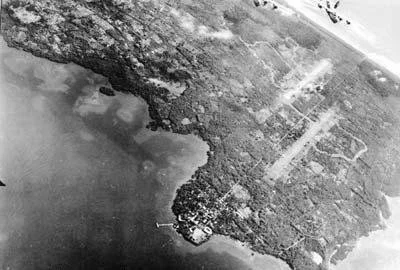
Photo Caption: Aerial view of 90th Bomb Group B-24s over Puerto Princesa Airfield (Palawan), USAAF, 5th Air Force 1945
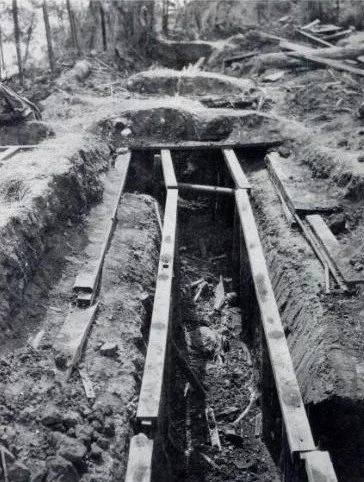
Photo Caption: Palawan Massacre Site. Human remains in Air Raid trench. USAAF, 5th Air Force 1945
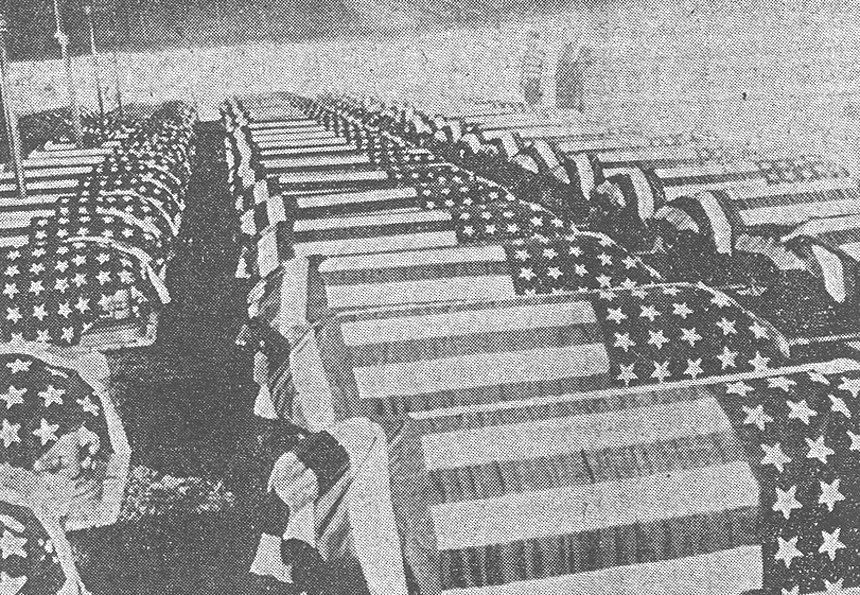
Million’s remains are among those 123 recovered after the war and buried in a mass grave at Jefferson Barracks National Cemetery, St. Louis, Missouri on February 14, 1952 in Section 85, Site14-66. This was presumably because the remains could not be positively individually identified.
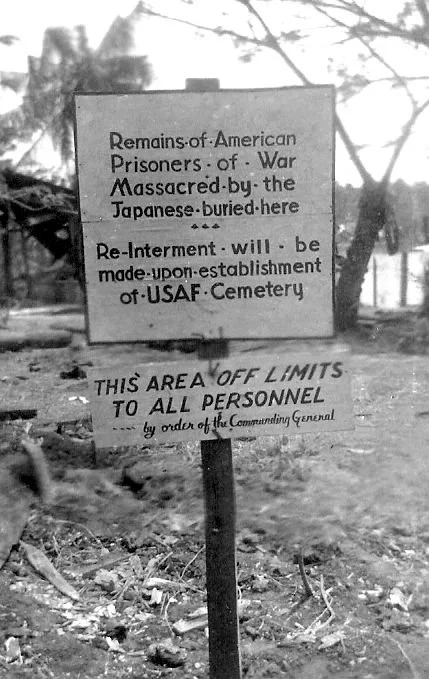
Photo Caption: Graves Registration Marker at Palawan Massacre Site. Burial Site of the Palawan Massacre POWs taken by Bob Meza, US Navy in March 1945
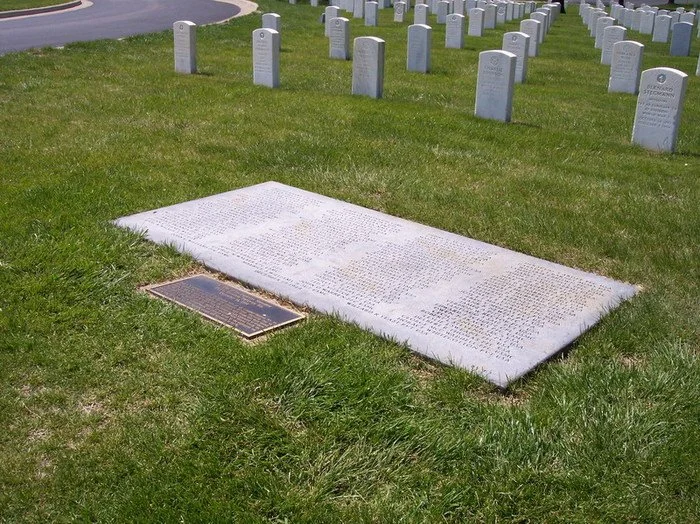
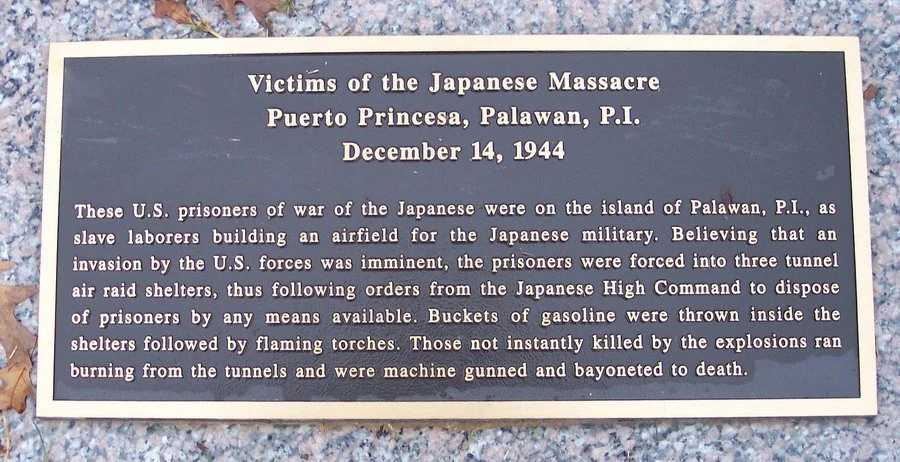
Photo Caption: Granit slab with the names of 123 recovered victims of the massacre and bronze marker at the site of the mass burial plot at Jefferson Barracks National Cemetery, St. Louis, Missouri on February 14, 1952 in Section 85.