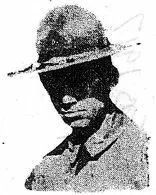
Estel E. Owsley
Captain Estel E. "Dick" Owsley, 32, of Middlesboro, Bell County, Kentucky, commander of Company H, 2nd Kentucky Regiment, died at 5:00 p.m. on Sunday, 11 February 1917, of pneumonia at Fort Thomas, Kentucky, while on federal active duty. He took ill after the trip from El Paso, Texas, to Kentucky as his unit returned from duty on the Mexican border during the Punitive Expedition. The unit was in the process of mustering out of federal service and would have been home in another week. Owsley was a native of Rose Hill, Lee County, Virginia. He is buried in Middlesboro Cemetery.
Capt. E. E. Owsley, Victim of Pneumonia
Three States, Middlesboro, Kentucky, 15 February 1917, p. 1
Capt. Owsley died in the military hospital at Newport after a brief illness. The announcement was a great shock to Middlesboro, as so few had heard of his illness. Only his brother Walter was with him when he died. He was captain of Company H, 2nd Regiment, made up of Middlesboro men, which had returned from six months of border duty. He took sick on the train while returning from Fort Bliss, Texas, to Fort Thomas, and the sudden change of climate and extraordinary cold weather brought on pneumonia.
The remains were brought home Tuesday morning after a military funeral at Fort Thomas, accompanied by his brother Walter and Second Lieutenant Garrard Ford of the Middlesboro company. Funeral services were held Wednesday at the M. E. Church, South, and more than 1,000 townspeople turned out to pay tribute to a soldier and beloved townsman who died in the service of his country. He was laid to rest in Colson Cemetery.
He was survived by his parents; five brothers, John, Walter and Cecil of Middlesboro, L. P. Owsley of Alton, Illinois, and James Owsley of Evansville, Indiana; and two sisters, Miss Jennie Owsley of Middlesboro and Mrs. Mary Sloan of Rose Hill, Virginia.
"Dick," as his friends called him, was well known and well liked throughout the city. He had belonged to the state militia for eight years, serving in several capacities, and for the last three years had been captain of his company. The newspaper said he would go out of the ordinary rules of military ethics to see that his men were treated kindly, and that his patience and indulgence with his company explained why he stood in such favor with them. Owsley studied law and was admitted to the bar but gave little attention to practice. Before being called to the border he had been employed by the government as a railway mail clerk.