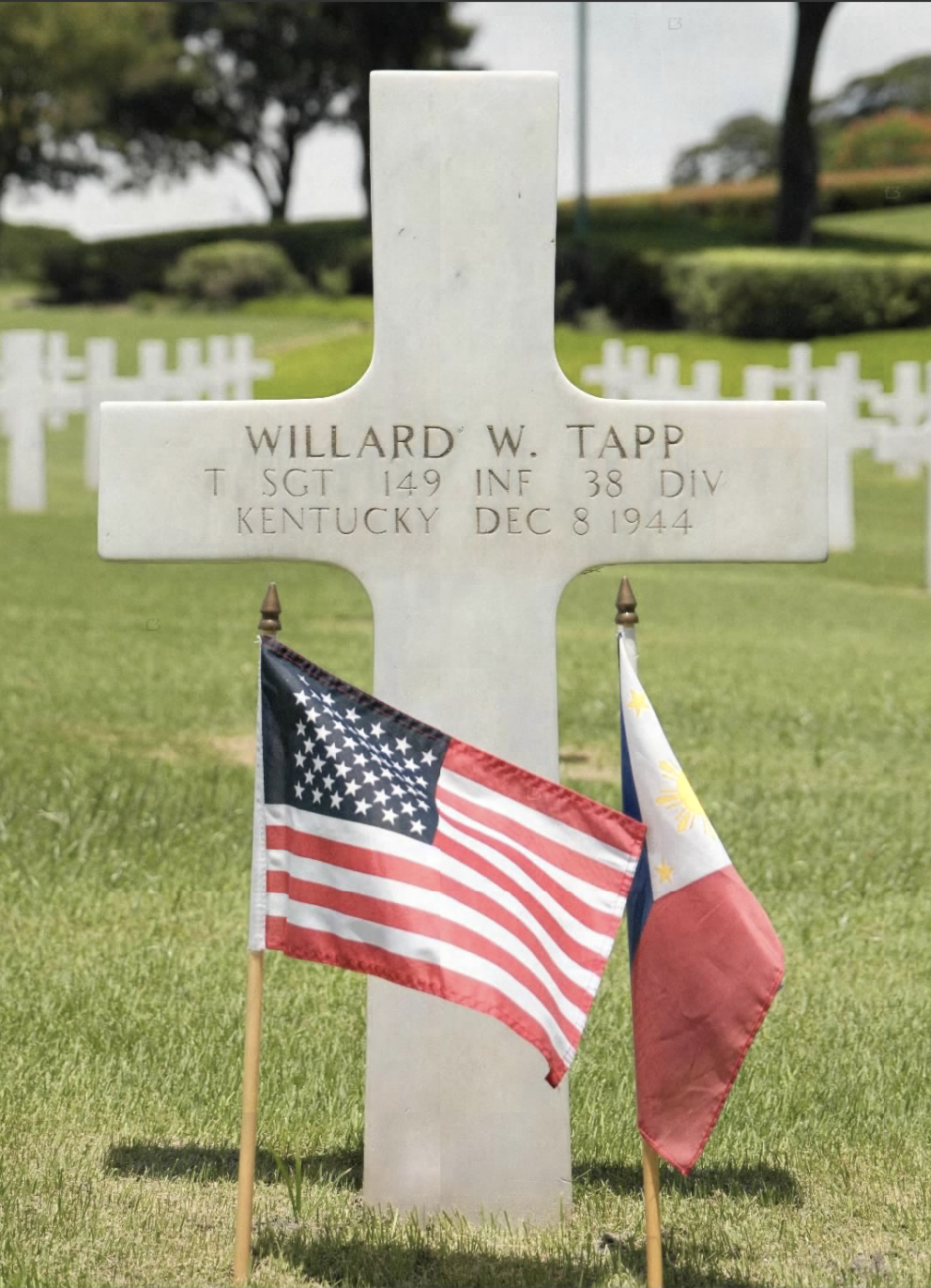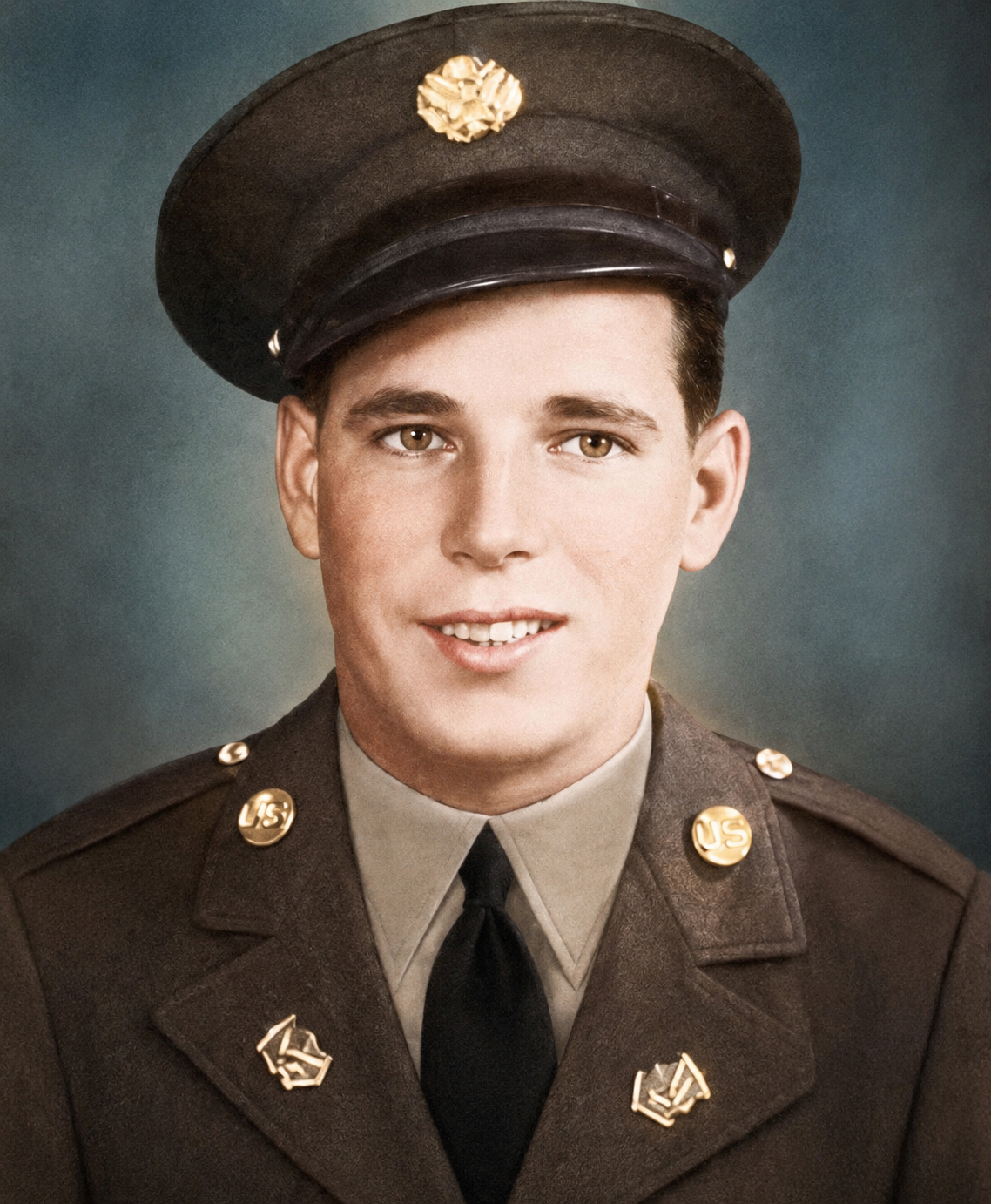
Willard W. Tapp
Technical Sergeant Willard W. Tapp was born on 14 April 1920 at Guffey in McLean County, Kentucky, the son of Charles and Grace Burden Tapp. Raised in western Kentucky during the years between the two World Wars, he came of age during a period of economic hardship and international uncertainty. While still a student, Tapp answered the call to service by enlisting in the Kentucky National Guard on 19 October 1939 at Livermore, Kentucky, joining Company K, 149th Infantry Regiment.
The 149th Infantry Regiment was a component of the 38th Infantry Division, a National Guard division composed primarily of soldiers from Kentucky, Indiana, and West Virginia. As global tensions increased and war spread across Europe and Asia, Tapp and his fellow Guardsmen trained for the possibility that they too would be called into federal service. That call came on 17 January 1941 when the Kentucky National Guard was mobilized for active duty nearly eleven months before the United States entered World War II. Over the next several years, Tapp served faithfully through the Army's wartime expansion, advanced through the enlisted ranks, and eventually attained the rank of Technical Sergeant.
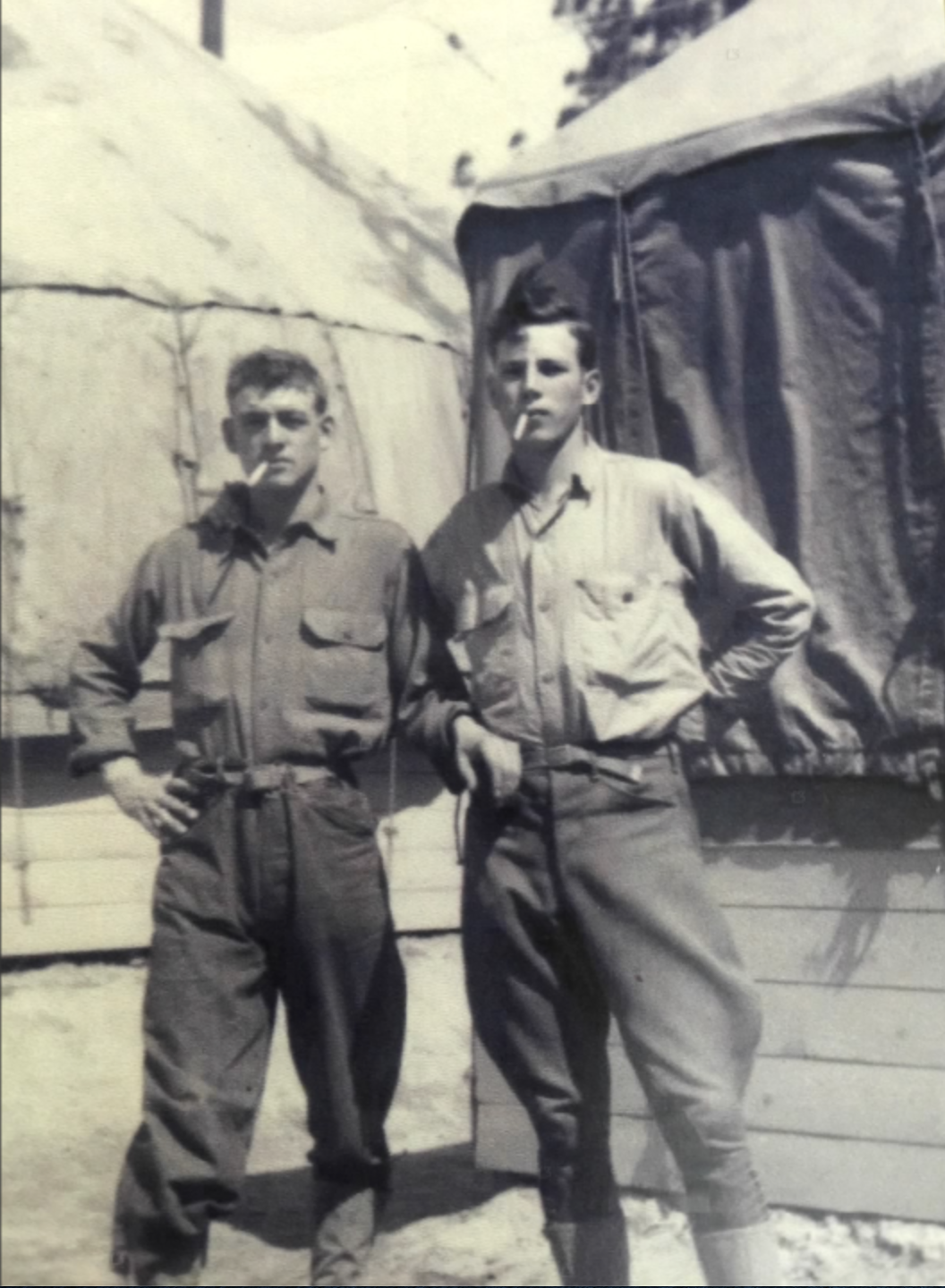
By late 1944, the 38th Infantry Division was engaged in the liberation of the Philippine Islands as part of General Douglas MacArthur's campaign to return to the Philippines. The Battle of Leyte marked the beginning of the liberation of the archipelago and was characterized by fierce combat and relentless Japanese attacks against Allied shipping.
On 5 December 1944, Tapp was aboard the Liberty ship SS Marcus Daly while elements of the 149th Infantry Regiment were being transported in the Philippines. The vessel was part of a convoy operating northeast of Mindanao when it came under repeated Japanese air attacks. Contemporary military records describe multiple raids throughout the day.
The most devastating attack occurred during the afternoon. According to company morning reports and naval accounts, the ship's anti-aircraft gunners hit an approaching Japanese aircraft. Although engulfed in flames, the aircraft continued forward and crashed into the vessel's port bow. The impact triggered a violent explosion that tore open the ship and ignited a major fire in the forward holds. Soldiers and crew fought the blaze for hours before bringing it under control.
Technical Sergeant Tapp was among those wounded during the attack. Reports indicate he suffered burns and shrapnel injuries and was treated aboard ship alongside numerous other casualties. The following day he was evacuated for additional medical treatment. Despite those efforts, he succumbed to his wounds on 8 December 1944 at the age of twenty-four.
Newspaper accounts reported that Tapp was survived by his wife, Mary Ann Girten Tapp of Owensboro; his parents, Charles and Grace Tapp of Livermore; six sisters; and four brothers, including Charles Lester Tapp, who was serving in the U.S. Army.
Technical Sergeant Tapp is buried in Plot N, Row 10, Grave 44 of the Manila American Cemetery and Memorial, Manila, Philippine Islands. His white marble cross stands among thousands of Americans who gave their lives in the Pacific Theater during World War II.
Although his death occurred during a maritime transport operation rather than a ground engagement, his sacrifice underscores the reality that combat service extended far beyond the front lines. Technical Sergeant Willard W. Tapp died while carrying out his duty in support of one of the decisive campaigns of the Pacific War, and his sacrifice remains part of the enduring legacy of Kentucky’s citizen-soldiers.